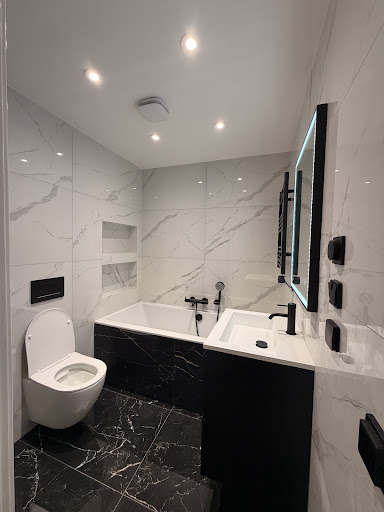
Hourly rate, business hours
Hourly rate, business hours
Our standard rate on weekdays between 07:00 and 17:00, including tools and small fitting materials. Within Amsterdam we charge no call-out fee.
Duration: at least 1 hour
€ 89.50

Blocked drains, leaks, radiators, underfloor heating, bathrooms, lead pipes or zinc work. 119 rates are published on this page, you calculate your own job in a minute, and we confirm that price before we start.
Certified plumber in Amsterdam, seven days a week from 07:00 to 22:00 — Sundays and public holidays included. Blocked drains, leak detection, bathrooms, boilers, lead pipe replacement, gutters and zinc work. Over 110 rates published below — calculate your own job in under a minute. We work in Dutch, English, Russian, Ukrainian, Polish, Turkish, Arabic, German, French, Indonesian, Papiamentu and Chinese.
English · Русский · Türkçe · Polski · العربية · Deutsch — choose your language above.
Five questions, about a minute. You get an indicative price with a range straight away, no form and no waiting.
A guarantee without consequence is just a sentence. Each of these six has a price, a term or a refund. So you know in advance what happens if something goes wrong — and you do not have to negotiate afterwards.
We charge per job, not per hour. If the work takes longer than we thought, that is our problem. Extra work exists only if you ask for it and it is confirmed in writing first.
If we cannot clear your drain, you pay nothing. No call-out fee, no start fee, no ‘we tried’ invoice.
On all fitting and repair work TopRenovatie gives a two-year guarantee on the labour. On unblocking, three months: if the same blockage returns, we come back free of charge.
Shoe covers on, dust sheets down, dust vacuumed and the rubble taken away. If you do not find it tidy, you get € 50 back — you only have to say so.
Need the same job again within twelve months, at the same address? Then today’s price still applies, even if our rates have gone up since.
Have a quote from someone else that does not feel right? Send it to us. We read it line by line and say honestly whether the price is fair — even if the answer is that you should just sign it.
Almost every expensive plumbing job started as something small that someone ignored for six months. Below is what we see most often, with the indicative price of the matching fix.
A stain that grows always means an active leak. A stain that is dry and not growing may mean nothing — but you only know that after a moisture reading.
Turn every tap off and see whether the water meter is still turning. If it is, water is leaking somewhere you cannot see. In an upper-floor flat that is usually under the screed.
Topping up twice a year is normal. Topping up every month is not: the expansion vessel is finished, or a heating pipe is leaking under the floor. Both are on the water side, and that is exactly our work.
Gurgling means the pipe is not getting enough air or is half blocked. This is the stage just before a blockage — acting now costs about half.
Grey, soft pipes you can scratch with a coin are lead. In Amsterdam-West and De Pijp they are still behind thousands of kitchen units.
In a pre-war building the main pipe is often still lead or steel that is too thin. If the shower goes cold when the washing machine fills downstairs, you have a pipe problem, not a tap problem.
The gutter is overflowing or leaking at a joint. Water running down the façade eats the mortar out within two winters.
Hot at the top and cold at the bottom means sludge in the system, not air. Bleeding does not help then; the system has to be flushed and balanced again.
Rising damp, or a leaking pipe in the crawl space. You can see the difference in the height: pipe leaks start higher than rising damp.
Eight groups, 119 services. Each card has an indicative price including VAT and a button that drops that job straight into the calculator above. Click a group heading to expand or collapse it.
Water running now, a pipe that leaks, a WC that overflows. We drive every day from 07:00 to 22:00, including Saturday, Sunday and public holidays — with the surcharge percentage on the table first. Between ten at night and seven in the morning we do not work, and we do not work on gas appliances at all.
Our standard rate on weekdays between 07:00 and 17:00, including tools and small fitting materials. Within Amsterdam we charge no call-out fee.
The amount every emergency visit starts with: the drive out, diagnosis and the first 30 minutes of work. After that we charge per quarter of an hour.
After the first hour we keep charging in 15-minute blocks, not by the hour started. You do not pay for time we are not working.
No hot water, no pressure, a boiler on fault or a pump that has stopped. We measure through, name the cause and give a fixed price for the repair.
We come first to get the water out: main stopcock off, the pipe capped, the room made safe. We schedule the actual repair calmly after that.
Flooding after a burst, a blocked sewer or heavy rain. We pump it out, dry off and look for the cause.
WC, sink, shower, soil stack or the main sewer. A fixed all-in price, a camera inspection when there is doubt, and no success means no payment.
A fixed all-in price for a toilet on an upper floor: the drive out, a drain snake or high pressure, a flush-through and a check. No success, no payment.
On the ground floor the blockage is more often in the connection to the main drain. We then use heavier equipment and longer snakes.
Grease and coffee grounds close up the kitchen waste. We clear it, clean the trap and flush the pipe through to the soil stack.
Hair and soap residue in the shower drain or the bath trap. We open it, clean it, clear it and put everything back watertight.
The smallest job in this group, and usually done in half an hour. If a worn trap turns out to be the cause, we replace it on the spot.
The vertical pipe every flat in the building discharges into. Almost always a matter for the HOA. We clear it mechanically and record on camera where the blockage was.
Nothing drains at once and there is water in the inspection chamber. We jet the sewer clear and check with the camera for roots and settlement.
A macerator in the attic or a basement needs its own approach. We take it apart, clean the blade and replace worn parts.
Sometimes the blockage is only reachable with the pan off. This extra includes a new seal and refitting.
Up to fifteen metres is included in the fixed price. If the blockage lies further on, we charge only the extra metres.
With grease, limescale or years of build-up, a snake alone will not clean the pipe. We jet the pipe back to its full diameter.
We run the camera through the pipe, measure the distance to each defect and supply footage and a report. Useful for the HOA, the insurer and the municipality.
The cheapest way to know whether the problem will come back: the camera goes through straight after the unblock.
A smell without a blockage means a leak in the vent or a dry trap. With smoke at low pressure we see within an hour where it is escaping.
Roots from poplars and willows grow through every joint. We cut them out and advise whether relining is the only real fix.
A plastic liner inside the existing pipe: no garden dug up, no floor taken out, and the pipe lasts another thirty years.
For restaurants, HOAs and buildings with a history of blockages: one visit a year costs less than one emergency call-out.
A wet patch with no visible cause. We search with thermography, acoustics and a smoke test — without breaking open — and supply a report your insurer will accept.
Thermography, acoustics, tracer gas and a moisture reading in one visit, with a report insurers and HOA managers accept. Without breaking open.
When you only want to know where it is and do not need a file built up. We name the spot and give the repair price straight away.
An objective reading of how wet a structure really is, with the figures on paper. Often the first step in a dispute with the neighbours.
Photos, readings, cause, a repair plan and a cost estimate in one PDF. Without this report a buildings insurer rarely pays out.
Open it up, replace the section of pipe, press-test it and close it ready for plastering. We leave the painting to your painter.
A heating leak under the floor shows itself as pressure loss. We locate it, repair it, top up and bleed the whole system.
Leaking traps, split PVC joints and couplings that have worked loose. We replace the failed part instead of sealing it with silicone.
A toilet that keeps running soon costs hundreds of euros in water a year. We replace the float, the flap or the complete internal mechanism.
New cartridges, ceramic discs or O-rings. If a repair is not worth it, we say so, instead of coming back twice.
A burst outside tap only shows water in the crawl space in spring. We replace it at once with a frost-proof model.
Taps, toilets, basins, showers and baths: fitting, replacing, moving and connecting. Including the pipework behind them.
A kitchen or basin tap, including new flexible hoses and tap connectors. The tap itself is separate, or we supply it.
Including a pressure test of the connections and setting the temperature limiter to 38 degrees.
We replace a leaking or silted-up trap with one you can open yourself.
Old pan out, waste checked, new pan fixed level and free of movement, connected and tested.
Everything in one price: pan, seat, cistern, fixings, fitting and removal of the old toilet.
Set and anchor the frame, adapt the waste, connect the cistern and test it before the wall is closed.
Concealed cistern, frame, pan, seat, flush plate and fitting. Only the tiling still has to be added.
Strip-out, pipework, wall-hung toilet, cloakroom basin, tiling, ventilation and finishing. One team, one schedule, one price.
Including connecting the tap, fitting the trap and bringing the waste to the right height.
Hang the basin level, connect the tap and trap, and finish the sanitary sealant.
Two taps, two traps, and usually an alteration to the pipework in the wall.
Hung level on old, out-of-true Amsterdam walls — including the right fixings for each wall type.
Set it, check the fall, connect the waste and finish the joint watertight.
Set the enclosure, connect the taps, fit the glass and seal every joint with sanitary silicone.
The most vulnerable joint in any bathroom. We tie it watertight into the perimeter seal and test it with standing water.
Reroute the waste, form the fall, fit the perimeter tape and waterproofing, set the linear drain and fit the taps. Tiling is separate.
Set the bath on feet or a panel, fit the overflow set, connect it and finish it watertight.
Including a protected electrical connection, an inspection hatch and a test of the pumps and jets.
Water, waste and venting to the specification, so dirty water never runs back into the appliance.
A new appliance tap, a waste bracket and a water seal. We replace the old fill hose as standard.
A toilet in the attic or basement, where there is no fall to the soil stack. Including venting and a non-return valve.
Including capping the connection points and separated disposal at the recycling centre.
All water and waste pipes new; shower drain, taps, toilet, basin and bath fitted and pressure-tested. Tiling and electrics are separate.
New water pipes, drains, lead-pipe replacement and soil stacks. In Amsterdam buildings that is often the real work behind the tiles. We do not do gas pipes.
Multilayer pipe or copper, pressed and pressure-tested to 10 bar. Including clips and insulation against condensation.
An extra hot and cold outlet with a waste, for example for a second basin or a coffee point.
Water, waste and connections for the sink, the dishwasher and, if needed, a boiling-water tap.
All supply and waste for the shower, basin, toilet and washing machine, chased in and pressure-tested.
For a new kitchen or bathroom layout. We cap the old point properly instead of leaving it behind the wall.
Still present in pre-war Amsterdam. We replace the whole run from the water meter to the outlet and supply a water analysis after handover.
Pipes in poured floors, under stairs or in listed finishes. More strip-out, more making good, more consultation with heritage.
PVC with the right fall of 1 in 100 and a clip every metre, so nothing sits in the pipe.
Floor opened, waste laid to a fall, insulated against sound and closed again. The floor finish is separate.
Cast iron out, sound-damped PVC in, with an inspection hatch on every floor. We agree the schedule with all the residents.
All internal drainage renewed up to the property boundary, including a rodding point and a camera handover.
A main stopcock that no longer closes makes every repair more expensive. We replace it in consultation with Waternet.
Required on connections to the heating, an outside tap and a water softener — and the first thing an inspector looks for.
For upper flats and roof terraces where the pressure is not enough for a rain shower.
Mill the chases, conceal the pipe and close them ready for plastering. In solid masonry this takes longer than in plaster blocks.
Drilled cleanly instead of chopped out, and finished watertight with a sleeve.
Everything on the water side of your heating: radiators, underfloor heating, hydronic balancing, expansion vessel and pump, plus electric boilers, solar boilers and heat pumps. We do not touch the gas boiler itself — that needs a CO certification we deliberately do not hold.
Drain down, old radiator out, hang the new one, connect it, fill and bleed the system.
A standard panel radiator sized for the room, including valves and fitting.
New pipes to the place you want, old connections capped and made good.
Heavier brackets, exact setting out and connections precisely in the centre — on a designer radiator you see every millimetre.
With an electric element for the summer, so you still have dry towels outside the heating season.
Seized valves mean cold rooms and a heating bill that is too high. Replacement can usually be done without draining down.
Pipes in milled slots in the existing screed. No loss of height, and no doors to trim.
On a new floor the best option: the highest output per m² and the longest life.
Extra heat under the tiles, laid in half a day. A connection on its own circuit is required.
Including the pump group, a thermostatic head on each circuit and balancing the flow on each loop.
Each radiator gets exactly the flow the room needs. It often saves 5 to 10 percent on the gas bill.
For cold upper floors or a sloshing sound in the pipes. Including a check of the expansion vessel.
The usual cause of a boiler that keeps losing pressure. Often cheaper than topping up five times.
A modern A-rated pump uses up to eighty percent less electricity than a pump from the 1990s.
Including the inlet group, an expansion vessel and a discharge pipe to a visible waste point.
Hot water at the sink without the wait. Including its own tap and a protected connection.
For homes without gas. Including the support frame, because a full cylinder weighs more than a hundred kilos.
Collector on the roof, storage vessel indoors and after-heating on the water side. Eligible for the ISDE grant.
Makes hot water with a third of the electricity of an electric cylinder. It does need space and ventilation.
Outdoor unit, indoor unit and controls beside your existing boiler; we leave the connection to the boiler itself to a CO-certified installer. With the ISDE grant the net cost comes out considerably lower.
Including the wiring or a wireless receiver, the Wi-Fi link and setting a heating schedule.
The classic plumbing work: zinc gutters, rainwater downpipes, lead flashings, valley gutters and roof penetrations.
0.8 mm zinc on new brackets, with soldered joints instead of sealant. It lasts forty years.
The most affordable option for an extension or a shed, with a life of fifteen to twenty years.
On listed buildings and protected streetscapes, often required by the aesthetics committee.
Soldering, replacing brackets, repairing a split corner. Often enough to carry on for years.
Twice a year around leaf fall. Including a flush of the rainwater pipe and a photo report of the roof.
Zinc or PVC, with new brackets at the right centres so the pipe does not rattle.
For an extension or a shed, including the bend, the outlet and the brackets.
Including cutting out the old joint, grinding the chase, fitting stepped flashings and repointing.
The most common cause of roof leaks in Amsterdam. New lead all round, stepped flashings and a new capping.
Cheeks, fascias and the junction with the roof covering made watertight in one go.
For a vent, an extract or a flue, with a lead slate that meets the existing roof covering.
The valley between two roof slopes takes the most water and fails first. New zinc with a generous overlap.
Required on a flat roof: if the outlet blocks, the water leaves through the overflow spout instead of through the ceiling.
Halves the number of times the gutter has to be cleaned, and pays for itself within three years.
Along the canals a cherry picker is often the only option. We also arrange the permit with the municipality.
Inspections, legionella management, maintenance contracts and service work for homeowners’ associations, landlords and commercial buildings.
A check of backflow protection, materials, flow and dead legs, in line with the Waterwerkbladen.
On a sale, a letting or after a renovation: everything measured, recorded and drawn, with photos of the concealed pipes.
Required for priority premises, and increasingly asked for by HOAs with a communal hot-water system.
Sampling to NEN 6265 by an accredited laboratory, with the result within ten working days.
A yearly check of the drinking-water and drainage installation for landlords who want their liability covered. Gas and the flue are not part of it.
Amsterdam water is relatively soft, but in parts of the region a softener adds years of life to the boiler and the taps.
Including a bypass, a check valve and a waste on the rinse line — the three points where it usually goes wrong.
With a check valve and a drain-down, so in November you can make it frost-proof in thirty seconds.
The shut-off sits inside the wall, so no water remains in the tap itself that can freeze.
In consultation with Waternet, including a new main stop valve and a check valve that meets the rules.
One fault number, fixed rates, a yearly inspection of the soil stacks and gutters, and a report for the members’ meeting.
The whole Amsterdam market adds a surcharge outside business hours: thirty percent in the evening, fifty percent on Saturday and one hundred percent on Sunday and public holidays. Most firms only show it on the invoice. We publish it here, and you hear the amount on the phone before we drive.
Our standard rate. No surcharge, and no call-out fee within Amsterdam.
Outside business hours, but not double rate: our technicians work an evening shift, not a night shift.
We take a planned job off the board so we can be with you within two hours. Applies on weekdays between 07:00 and 17:00.
One percentage for the whole of Saturday, from seven in the morning until ten at night.
Double rate. We do come out on Sundays and public holidays — many plumbers don’t.
Important: we apply the surcharge only to the labour part of the job, not to the materials. An electric boiler of € 1,050 therefore does not become € 2,100 on Sunday — only the fitting hours are doubled. The calculator at the top shows that difference per job straight away. Official public holidays are New Year’s Day, Easter Sunday and Monday, King’s Day, Liberation Day (in anniversary years), Ascension Day, Whit Sunday and Monday, and both Christmas days. There is no night rate, and that is not an oversight: between 22:00 and 07:00 we do not work. What you can do until then is in the block below.
We are reachable seven days a week from 07:00 to 22:00, including Sunday and public holidays. Between ten at night and seven in the morning we do not work. Better to say that now than to reach a voicemail at half past two — and it saves you the night rate other firms charge.
It is in the meter cupboard, next to the water meter. Then open the lowest tap in the house so the pipes drain and the leak stops. That is what actually limits the damage — not the technician who rings an hour later.
The national grid-operator fault line is free and staffed day and night. They come to shut the gas off. We do not work on gas, day or night — that needs a CO certification we do not hold.
Fill in the form on this page or send a photo to our number. You are then first on the list at 07:00, ahead of the people who only start calling then.
A photo of the stain or the puddle, with the time on it, is later your main evidence for the buildings insurer. Take it before you start mopping.
A blocked WC, a dripping tap or a radiator that will not heat can wait until morning — and then costs you half a night rate. If there is immediate danger to electrics or the structure, call 112.
Leave my report ready for 07:00Call +31 6 87 97 86 44Choose a day and a two-hour arrival window. Each window shows the rate that applies, so you can decide whether it has to be today or whether Monday morning is half the price.
You pick your job in the calculator above and see an indicative price with a range straight away. No form, no email address, no waiting.
Send a photo and we turn that guide price into a fixed price within two working hours. Usually without coming to look first.
You choose a day and a two-hour arrival window. We confirm the window and send the technician’s name 30 minutes beforehand.
Half an hour before arrival you get a message with the technician’s name, certification and phone number.
The technician shows you the price on a tablet and you tap to agree. Only then does the tool bag open.
You get photos of what is behind the wall or under the floor, the measured values and the invoice. All in one PDF, straight to your email.
Indicative prices for Amsterdam and surroundings, 2026, including 21% VAT. Backed by public market figures from Werkspot, Homedeal, Slimster, Trustoo and OfferteAdviseur and by published rates from Amsterdam peers. Search by keyword, or print the list and take it with you.
| Hourly rate, business hours | per hour, Mon–Fri 07:00–17:00 | € 89.50 |
|---|---|---|
| Emergency call-out start fee | start fee incl. first 30 minutes | € 95 |
| Follow-on rate per 15 minutes | per 15 minutes after the first hour | € 25 |
| Fault finding and repair | diagnosis + first hour | € 175 |
| Emergency shut-off & damage control | per visit | € 135 |
| Pumping out a cellar or crawl space | first hour, then hourly rate | € 295 |
| Unblocking a toilet | fixed price, all-in | € 165 |
|---|---|---|
| Ground-floor toilet unblocking | fixed price, all-in | € 225 |
| Kitchen sink drain unblocking | fixed price, all-in | € 165 |
| Shower or bath drain unblocking | fixed price, all-in | € 165 |
| Basin or cloakroom sink unblocking | fixed price, all-in | € 149 |
| Soil stack unblocking | fixed price, incl. camera inspection | € 296 |
| Main or outdoor sewer unblocking | fixed price, incl. high-pressure and camera | € 296 |
| Macerator unblocking or overhaul | fixed price | € 225 |
| Removing and refitting a toilet pan | extra | € 90 |
| Additional pipe length | per metre beyond 15 metres | € 14 |
| High-pressure sewer jetting | per visit | € 295 |
| CCTV sewer inspection | standalone inspection, incl. video report | € 195 |
| CCTV check straight after unblocking | extra during an unblock | € 85 |
| Sewer odour tracing with a smoke test | smoke test, incl. report | € 225 |
| Root cutting in the sewer | per visit | € 450 |
| Trenchless sewer relining | per metre | € 195 |
| Preventive sewer cleaning | per visit | € 245 |
| Leak detection with an insurer-ready report | fixed fee, incl. report | € 545 |
|---|---|---|
| Basic leak detection | up to 1.5 hours, without a report | € 295 |
| Moisture measurement of wall or floor | per measurement | € 125 |
| Damage report for insurer or HOA | freestanding | € 135 |
| Water pipe leak repair | per leak | € 245 |
| Heating pipe leak repair | per leak | € 295 |
| Waste pipe leak repair | per leak | € 245 |
| Fixing a running toilet | per toilet | € 145 |
| Repairing a dripping tap | per tap | € 115 |
| Repairing a frost-damaged outside tap | per tap | € 195 |
| Replacing a tap | labour per tap | € 125 |
|---|---|---|
| Fitting a thermostatic shower mixer | labour per tap | € 145 |
| Replacing a trap | per item | € 110 |
| Replacing a floor-standing toilet | labour, pan excluded | € 265 |
| Complete floor-standing toilet replacement | incl. standard pan and seat | € 545 |
| Fitting a wall-hung toilet with concealed cistern | labour incl. fitting a concealed cistern | € 595 |
| Wall-hung toilet, complete with materials | complete, incl. materials | € 1,250 |
| Complete toilet room renovation | complete toilet, 1–2 m² | € 3,250 |
| Fitting a cloakroom basin | labour per item | € 165 |
| Fitting or replacing a basin | labour per item | € 215 |
| Fitting a double basin | labour per item | € 345 |
| Fitting a vanity unit or mirror cabinet | per item | € 195 |
| Fitting a shower tray | labour per item | € 345 |
| Fitting a shower enclosure | labour per item | € 465 |
| Fitting a shower drain or linear channel | per item | € 425 |
| Building a walk-in shower | labour incl. pipework | € 1,450 |
| Fitting a bath | labour per item | € 475 |
| Fitting a whirlpool bath | labour per item | € 895 |
| Connecting a dishwasher | per appliance | € 195 |
| Connecting a washing machine | per appliance | € 175 |
| Installing a macerator | including fitting | € 895 |
| Removing and disposing of old sanitary ware | per part | € 95 |
| Complete bathroom: sanitary ware and pipework | labour, bathroom 5–9 m² | € 2,650 |
| Installing or replacing water pipe | per metre, incl. labour | € 78 |
|---|---|---|
| Adding a new outlet point | per outlet | € 275 |
| Kitchen pipework | per kitchen | € 425 |
| Bathroom pipework | per bathroom | € 495 |
| Relocating water pipework | per run | € 425 |
| Lead water pipe replacement | standard home | € 1,150 |
| Lead pipe replacement, difficult access | hard-to-reach run | € 2,350 |
| Internal waste pipework | per metre, indoors | € 98 |
| Waste pipework below floor level | per metre, under the floor | € 195 |
| Replacing a soil stack | per floor run | € 2,350 |
| Renewing all drainage in a home | whole home | € 4,750 |
| Replacing the main stop tap | per item | € 195 |
| Fitting a check valve or backflow preventer | per item | € 145 |
| Installing a booster pump | including fitting | € 795 |
| Chasing and making good, ready for plastering | per linear metre | € 62 |
| Core drilling through wall or foundation | per penetration | € 125 |
| Replacing a radiator | labour per radiator | € 285 |
|---|---|---|
| Radiator replacement including the radiator | incl. panel radiator | € 465 |
| Relocating a radiator | per radiator | € 425 |
| Fitting a designer radiator | including radiator and fitting | € 695 |
| Fitting a towel radiator | including radiator and fitting | € 445 |
| Replacing a radiator thermostatic valve | per item | € 75 |
| Retrofitting underfloor heating into an existing floor | per m², existing floor | € 55 |
| Underfloor heating in a new screed | per m², new screed | € 68 |
| Electric underfloor heating for a bathroom | per m², electric mats | € 78 |
| Fitting an underfloor heating manifold | per manifold | € 675 |
| Hydraulic balancing | up to 10 radiators | € 425 |
| Filling and bleeding the heating system | per visit | € 125 |
| Replacing an expansion vessel | incl. vessel | € 245 |
| Replacing a heating circulation pump | incl. pump | € 375 |
| Fitting a water heater | labour, boiler excluded | € 225 |
| Under-sink water heater (kitchen) | complete | € 345 |
| Installing an electric water heater | complete, 80–120 litres | € 1,050 |
| Installing a solar water heater | complete system | € 3,150 |
| Installing a heat pump water heater | complete system | € 3,450 |
| Installing a hybrid heat pump | complete, incl. installation | € 5,750 |
| Fitting a smart thermostat | incl. installation | € 245 |
| Replacing a zinc gutter | per metre, zinc | € 115 |
|---|---|---|
| Replacing a PVC gutter | per metre, PVC | € 75 |
| Replacing a copper gutter | per metre, copper | € 165 |
| Gutter repair | per repair | € 265 |
| Gutter cleaning | terraced house or canal house | € 165 |
| Replacing a rainwater downpipe | per metre | € 92 |
| Replacing a downpipe up to 3 metres | up to 3 metres | € 165 |
| Replacing lead flashing | per linear metre | € 185 |
| Renewing chimney lead work | per chimney | € 650 |
| Renewing dormer lead work | per dormer | € 795 |
| Fitting or replacing a roof penetration | per item | € 195 |
| Renewing a valley gutter | per metre | € 175 |
| Fitting an emergency overflow | per item | € 195 |
| Fitting gutter guards | per metre fitted | € 22 |
| Scaffolding or a cherry picker | if required | € 650 |
| Water installation inspection | incl. report | € 325 |
|---|---|---|
| Handover inspection | incl. report and drawing | € 385 |
| Legionella risk analysis and control plan | small communal system | € 1,450 |
| Legionella sampling and analysis | per outlet | € 110 |
| Periodic water safety inspection | per year | € 175 |
| Installing a water softener | fitted complete | € 1,650 |
| Connecting a water softener | labour, you supply the appliance | € 325 |
| Fitting an outside tap | on the façade | € 265 |
| Fitting a frost-proof wall tap | frost-proof model | € 325 |
| Relocating a water meter or adapting the meter cupboard | per metre | € 345 |
| Service contract for HOA or landlord | per building, per year | € 795 |
What these amounts include: labour of our own technicians, tools, small fitting materials, use of machines, flushing and checking, clearing up afterwards and the guarantee. Within the municipality of Amsterdam we charge no call-out fee; outside it, € 39. Materials and appliances are included only where the line says ‘complete’ or ‘incl. materials’; if we supply them, we add 20% to the purchase price and you see the purchase invoice. The amounts are guide prices: after a photo or a survey we turn them into a fixed price.
Quote platforms sell your request on to several firms. That is their business model, and it works — for them. For you it usually means three to five phone calls and still no price. Below is the difference, without the sales language.
| What it comes down to | TopRenovatie, direct | A quote platform |
|---|---|---|
| What you know in advance | An indicative price within 60 seconds and 119 rates published on the page | A price only after you leave your details and three firms call you |
| Who does the work | Our own regular team, with name and certification known beforehand | A changing tradesperson from a list of thousands, a different one each time |
| Who is responsible if something goes wrong | We are — one contract, one point of contact, a two-year guarantee | The platform brokers; the agreement is between you and the tradesperson |
| Surcharges outside business hours | Four percentages, published on this page, before we drive | Different per tradesperson and usually visible only on the invoice |
| How many phone calls you get | One, from us | Usually three to five, from firms that bought your details |
| What happens if it goes wrong | We come back under guarantee, free of charge | You argue it out yourself with the tradesperson |
These are the jobs we do most often, with the work listed and the contract sum that went with it. If you recognise your own situation, use the button under the project and we will price it for your address.
The ground-floor flat got water through the ceiling every time the neighbours showered. The camera showed the cast-iron soil stack was rusted through over its full height. We replaced it floor by floor with sound-damped PVC, with an inspection hatch on every storey, and phased the work so each home was without a drain for one day at most.
A forty-centimetre stain at the neighbours downstairs, and three contractors who wanted to strip the bathroom out. With thermography and tracer gas we narrowed the leak to an eight-centimetre joint under the shower corner. A thirty-by-thirty opening, the joint replaced, and the report went to the buildings insurer the same week.
There was still lead behind the tiles. Everything out: new water pipes to the kitchen and bathroom, drains laid to a fall, a walk-in shower with a linear drain and waterproofing to thirty centimetres above the floor. The client could shower again after nine working days, with a water analysis as proof the lead was gone.
Four unblocks in two years. The camera showed three root ingresses over eighteen metres. Instead of unblocking again we milled and relined the pipe: no digging, the border stayed, and the pipe is good for another thirty years.
The boiler was seven years old and running fine. Replacing it would have been a waste. We set a hybrid heat pump next to it, balanced the system on the water side and replaced two radiators with low-temperature models. The connection to the boiler itself was done by a CO-certified installer — we do not work on gas appliances. We submitted the ISDE application; gas use fell by about sixty percent in the first year.
The timber box gutter was rotten in three places and the lead at the chimney was loose. Working on the canal means a cherry picker, an exemption and consultation with Monuments and Archaeology. New 0.8 mm zinc, soldered rather than sealed with mastic, and new leadwork around the chimney.
A family with two young children who wanted to know what was coming out of the tap. The analysis showed lead above the limit. We replaced the whole run from the water meter to the kitchen and bathroom with multilayer pipe, in three days, while the family stayed in the house — water back on the tap every evening.
The homeowners’ association called a different firm for every fault and got a different price every time. Now there is one number, a fixed rate per job and a yearly inspection of the soil stacks and gutters. The report goes straight to the manager and to the members’ meeting.
Moving a kitchen seven metres means getting the drain to a fall without losing the floor. We milled the drain into the screed, ran new water pipes, connected a boiling-water tap and a dishwasher, and capped the old connection properly instead of leaving it behind the wall.
The landlord is responsible for maintaining the home and for putting defects right. The tenant is responsible for minor repairs: maintenance that is simple, costs little and can be done without a tradesperson. That distinction decides who gets the invoice on almost every plumbing job.
If the blockage comes from use — grease in the sink, hair in the shower drain, wet wipes in the toilet — it is minor maintenance and the tenant pays. If the cause is the condition of the pipe, such as root ingress, settlement, the wrong fall or a collapsed pipe, it is a defect and the landlord pays. We record that cause on camera and put it on the invoice, so there is something to show rather than something to claim.
A leaking pipe, a broken boiler, a radiator that no longer heats, lead pipes: those are defects and they are for the landlord’s account. The tenant does have to report it — if they do not and the damage grows because of that, they can be liable for the extra part. Report it in writing, with a photo and a date.
Your building’s deed of division is decisive, but the rule of thumb is simple. Everything that is communal falls under the VvE: the soil stack, the main water feed, the roof, the gutters, the façade and the rainwater downpipes. Everything inside the private home, behind the private meter, falls under the individual owner.
In practice it goes wrong at the borderline cases: the connection of your bathroom to the soil stack, the pipe in the floor between two homes, and whether lead pipes inside a home belong to the VvE or not. For every leak in a VvE we supply a report stating which part of the installation the leak was on, so the manager can allocate the cost without a members’ meeting.
Damage to the building itself normally falls under buildings insurance; damage to your belongings under contents insurance. Almost all policies also cover the search costs: finding the leak and the opening-up and making-good that requires. What is almost never covered is repairing the pipe itself. Ask your insurer about search costs before you have someone come out, and make sure you get a report.
Nothing is straight, nothing is square, and the floors sit on beams you do not simply cut through. Cast iron and lead are often still there, and the façade and roof are governed by Monuments and Archaeology: the aesthetics committee prescribes zinc or copper, not plastic. Scaffolding is not allowed everywhere, so we use a cherry picker and apply to the municipality for the exemption. Expect a longer lead time and a higher price — the calculator above includes that as a factor of 1.22.
Solid masonry means chasing rather than milling, and making good rather than just filling. The kitchen is often at the back with a long, tight run to the soil stack, and the bathroom was built in during the 1960s without waterproofing under the tiles. That is why, here, the neighbour downstairs is usually the first to see a stain.
Here the soil stack is at the heart of almost every problem. One cast-iron pipe serves four to eight homes, and when it silts up or rusts through every resident notices at once. This is work for the VvE, with a plan per floor and a conversation with each resident. We always phase a job like this so nobody is without a drain for more than a day.
Pipes lie in the screed, everything is reachable and chasing is almost never needed. The trap here is a different one: a renovation that hits a pipe in the floor and the underfloor heating starts leaking with it. We scan a floor like that with a thermal camera before anyone drills.
We earn nothing from the ten minutes you gain by turning the main stopcock off. You do: drying costs after water damage rise faster than any plumber’s bill.
Turn the main stopcock off — it is in the meter cupboard, next to the water meter. Then open the lowest tap in the house so the pipes drain. Every minute you gain this way saves hundreds of euros in drying costs.
Do not flush again. Take the lid off the cistern and lift the float, or turn off the little tap behind the toilet. Then you have time.
Note the code before you reset, and check the water pressure on the gauge. Only CO-certified installers may work on the boiler itself — so we do not. If the code points to pressure or a leaking pipe, that is our work.
Bleed it with the key at the bleed nipple, then check the pressure. Below 1.2 bar you need to top up. If it still does not get warm, the thermostatic valve is stuck.
Boiling water with soda works on grease. A sulphuric-acid drain cleaner does not: it eats old PVC joints and cast iron, and we are then not allowed to use the snake. Tell us if you have used one anyway.
Do not touch any switches, do not use the doorbell, open the windows, get everyone outside and call the national fault line 0800-9009. It is free and staffed day and night. Do not call us after that: we do not work on gas pipes or gas appliances. The grid operator shuts it off; a CO-certified installer repairs it.
Turn the inside isolating valve off and leave the outside tap open so the remaining water drains out. That avoids the job that costs you € 195 in March.
Photograph the stain with a date, measure it, and agree to measure again in three days. If it grows, the leak is active. Those two photos are later your main evidence for the insurer.
Every price on this page is an indicative price for the plumbing work itself. The items below sit outside it, and we would rather say so now than halfway through the job.
We only publish reviews that were actually left, with the name and the district. Placeholder notes are not shown here. Once the Google Business Profile is connected, reviews appear with the current average and the count.
Our weekday hourly rate between 07:00 and 17:00 is € 89.50 including 21% VAT. That covers tools and small fitting materials, and within Amsterdam we charge no call-out. For comparison: Werkspot publishes an Amsterdam market band of € 75 to € 85 per hour excluding VAT — roughly € 91 to € 103 including VAT. For most jobs on this page we do not charge by the hour but a fixed price per job, so you do not pay for a wasted morning.
Not within the municipality of Amsterdam. Outside it we charge € 39 including VAT, regardless of distance within our service area. For a planned visit at an address already under a maintenance contract, that fee is waived too.
We publish the surcharges exactly as we charge them — there are only four. Same-day emergency within two hours on a weekday: 35%. Weekday evening between 17:00 and 22:00: 30%. Saturday, all day from 07:00 to 22:00: 50%. Sunday and official public holidays: 100%, i.e. double rate. Unblocking a WC at € 165 therefore costs € 305 on Sunday — not € 330 — because we apply the surcharge to labour only, not materials. We do not work between 22:00 and 07:00, so there is no night rate. We quote the amount before we drive, not afterwards on the invoice.
Because the difference in what we must pay a technician is that large too. An evening shift until ten is a shifted working day; a Sunday shift is a day off someone gives up. We can bury those costs in a higher base rate you also pay on Tuesday morning, or set them out honestly. We choose the second. If your job can wait until Monday, we say so on the phone — that saves you half.
For every job on our price list you get a fixed price. Send a photo via WhatsApp and we turn the calculator guide price into a fixed price within two working hours, usually without a site visit first. Only for work behind a closed wall or under a sealed floor do we work with a guide price plus a band — and then we stop and call you as soon as we see what is really there.
Unblocking a WC, kitchen sink, washbasin or shower drain costs € 165 including VAT, all-in: call-out, equipment, flushing and check. A ground-floor WC, where the connection to the main line is more often the cause, costs € 225. A riser or main sewer costs € 296 including camera inspection. Beyond fifteen metres of pipe length we charge € 14 per extra metre.
If we cannot clear your drain, you pay nothing: no call-out, no start fee, no invoice. The exception is a fixed obstruction — ingrown concrete, a collapsed pipe, a faulty macerator, or a pipe that was installed wrongly. We establish that on site, show it to you on camera, and then discuss what can be done.
Leak detection with a report that insurers and HOA managers accept costs € 545 including VAT. That includes thermography, acoustic testing, tracer gas and moisture readings, plus the report with photos and measured values. If you only want to know where it is without building a claim file, a basic one-and-a-half-hour survey costs € 295. Without a report a buildings insurer rarely pays out, so for ceiling or floor damage the fuller option is usually the cheaper one.
In the vast majority of cases, yes. With a thermal camera we see the temperature difference of a hot-water leak through the floor; with acoustic gear we hear a pressurised pipe leaking; with tracer gas we find a leak in a pipe that no longer carries water. We only open up once we have narrowed the leak to ten to fifteen centimetres.
No — and that is a deliberate choice. Since 1 April 2023 only a CO-certified company may work on gas combustion appliances in the Netherlands: central-heating boilers, geysers, gas heaters and the related flue. We do not hold that certification, so we do not do that work — no gas pipes, no capping, no ‘quick look’. Everything on the water side of your heating we do handle: radiators, underfloor heating, hydronic balancing, expansion vessel, pump, and electric boilers, solar boilers and heat pumps. If you need work on the boiler itself, we refer you to a certified installer and align the schedule with them so you do not have to plan twice.
Yes, if you have them. Lead pipes still appear in Amsterdam buildings from before 1960, especially in West, De Pijp and parts of Oost. Lead dissolves slowly in stagnant water and is harmful, especially for young children and pregnant women. You can recognise them yourself: lead pipes are grey and soft, and you can scratch a line in them with a coin. A standard replacement with us costs € 1,150; if pipes are hard to reach that rises to € 2,350. We supply a water analysis before and after.
The main rule in the Dutch Civil Code is that the landlord is responsible for maintenance and defects, and the tenant for so-called minor repairs. A blockage the tenant can clear with a plunger or drain snake counts as minor maintenance. If the blockage sits deeper in the pipe, or it is a leak, a faulty boiler or lead pipes, it is the landlord. We always state the cause explicitly on the invoice so you do not have to fight that discussion alone.
In short: if the blockage comes from use — grease, hair, wet wipes — the tenant pays. If the cause is the condition of the pipe — root ingress, settlement, wrong fall or a collapsed pipe — the landlord pays. We record the cause on camera so there is something to show, not just something to claim.
It depends on where the pipe runs. The riser, main water feed, roof, gutters and everything communal falls under the HOA. Pipes inside the private home, behind the private meter, fall under the owner. Your building’s deed of division is decisive. For every HOA leak we supply a report stating which part of the installation the leak was on, so the manager can allocate costs without argument.
Damage to the building itself is normally under buildings insurance; damage to your belongings under contents insurance. Almost all policies also cover the cost of finding the leak and the opening and making-good needed for that. What is almost never covered is repairing the pipe itself. Ask your insurer about search costs before you call someone out, and make sure you get a report — without one, a claim is hard.
The person whose property holds the leak is in principle liable for the neighbours’ damage, even if they could not help it. In practice buildings insurers settle it between themselves, provided there is a report that names the cause. What you can do today: photograph the stain with a date, measure it, and repeat after three days. If it grows, the leak is active.
Within our opening hours — every day from 07:00 to 22:00 — in Amsterdam within 45 to 60 minutes, depending on district and traffic. In Amstelveen, Diemen, Duivendrecht and Ouderkerk within 60 to 75 minutes. In Haarlem, Zaandam, Hoofddorp, Purmerend and Almere within 90 minutes. When we take the call you get a concrete arrival time, not ‘as soon as possible’. If you call after ten in the evening, you are first on the list at 07:00.
Weekends and public holidays yes; nights no. We are reachable seven days a week from 07:00 to 22:00, including Saturday, Sunday and official holidays. Between 22:00 and 07:00 we do not drive: night work on pipes and installations goes wrong more often, and a technician woken at three is not sharp the next day either. If you call at night, your job is first on the list at 07:00. What you can do yourself until then to limit damage is further down this page.
Emergency means: water running that you cannot stop; a blockage that leaves you without a toilet; no hot water in frost; or water running into the neighbours. Not an emergency: a dripping tap, a radiator that will not heat, a slow drain, or a thermostat that switches poorly. For that second group we say honestly that waiting until Monday is better — that saves you half. A gas smell is a separate category: call 0800-9009 first, the free grid-operator fault line, which is staffed at night too.
A washbasin or basin: thirty to sixty minutes. A WC, kitchen sink or shower drain: forty-five minutes to one and a half hours. A riser: two to three hours. The main sewer with high pressure and camera: two to four hours. A standalone camera inspection takes one to two hours including the report.
Yes — it is one of our specialisms. In a canal house nothing is square, cast iron and lead still turn up, and Monuments and Archaeology rules govern what you may do to the façade and roof. We use cherry pickers where scaffolding will not fit, apply for the municipal exemption, and use materials the aesthetics committee accepts — zinc and copper where prescribed, not plastic.
Yes. A standalone inspection costs € 195 and delivers footage, a distance measurement per defect and a report. Immediately after an unblock the same inspection costs € 85. For HOAs we inspect risers in series, with a report per floor.
Usually yes, with relining. We mill the pipe clean, insert a resin-saturated liner and cure it against the existing pipe wall. No shovel goes in the ground; the pipe gets a smoother interior than when new and lasts about another thirty years. Relining with us costs € 195 per metre.
Yes. For HOAs and landlords we offer service contracts with one fault number, fixed rates per job, an annual inspection of risers and gutters, and a quarterly report you can forward unchanged to the members’ meeting. For commercial premises and hospitality we work outside opening hours so your business can stay open.
Two years on all fitting and repair work we carry out. Three months on unblocking: if the same blockage returns on that run, we come back free of charge. Materials carry the manufacturer’s warranty, typically two to ten years. If you supply materials yourself, our labour warranty still stands, but we cannot warrant the materials.
You pay afterwards — by invoice with a fourteen-day term, or on site by card or payment request. For projects above € 2,500 we work in stages: thirty percent at start, the rest on handover. We never ask for prepayment for an emergency visit.
Less of the hourly rate remains than people think: tools, van, insurance, certifications, stock, admin and non-billable travel time are all in it. What makes it feel expensive are the surprises afterwards. That is why we put everything on the table upfront: the rate, the surcharges, the fixed prices per job and what is not included. You are welcome to put our price list next to someone else’s line by line.
If you are a business, a VAT-taxed landlord or an HOA with VAT liability, the 21% VAT is deductible for you. Flip the calculator switch to ‘business’ and you see all amounts excluding VAT. For private clients the amount including VAT is what you actually pay.
No. According to the Tax Authority the reduced 9% rate only applies to insulating, painting, plastering and wallpapering homes older than two years. Plumbing, installation and sanitary work falls under the general 21% rate. If we also do plastering or insulation in the same project, we split that on the invoice so you do get the low rate on that part.
That is fine. We then charge labour only, and the calculator shows items labelled ‘arbeid, exclusief materiaal’ (labour, materials excluded). Two points: we cannot give a materials warranty on what you supply yourself, and we will not install appliances that do not meet Dutch regulations. If in doubt, we send a shopping list beforehand.
Yes. We work daily in Dutch, English, Russian and Ukrainian; the team also covers Polish, Turkish, Arabic, German, Papiamentu and Sranantongo. Choose your language at the top of this page — we translate the calculator and form. State your preferred language in the request and we send a technician who speaks it.
We backed them with public market figures from Werkspot, Homedeal, Slimster, Trustoo and OfferteAdviseur, plus published rates from Amsterdam peers. Our WC unblocking at € 165 sits in the € 151–€ 194 band used by major Amsterdam drain services. Put our list next to another and you land roughly the same — the difference is you can read ours beforehand.
Sanitary ware, taps, boilers, radiators and other appliances unless marked ‘complete’ or ‘incl. materials’. Also: tiling, plastering and painting after we close a chase; electrical work for a boiler or underfloor heating; scaffolding or a cherry picker when the building needs it; and one-off grid-operator or Waternet fees when upsizing or relocating a connection. That is all listed in the ‘Not included’ block on this page too.
In Amsterdam within 45 to 60 minutes for an emergency, in the immediate region within 60 to 75 minutes, and beyond that within an hour and a half. Within the municipality of Amsterdam we charge no call-out fee.
What you calculated and chose above comes with the request automatically. You do not have to type it again.
Met een vaste prijs als u een foto meestuurt, of met een tijdstip als wij eerst moeten kijken.
Wij verkopen uw aanvraag niet door. U wordt niet gebeld door vier andere bedrijven.
Zet in de toelichting welke taal u wilt spreken. Wij sturen een monteur die die taal beheerst.
Every price on this page is there because you should be able to read it before you call. If you put it next to another quote and cannot make sense of it, send that quote to us — we will read it and say honestly what we think, even if the answer is that you should just sign it.
 Google 5.0